Live · Global · Independent
Live Feeds
PinkVilla
Forbes
NDTV
Hindustan Times
8 Dead In Pro-Iran Protest At US Consulate In Pak, Most Had Bullet Wounds
onmynews.com

8 Dead In Pro-Iran Protest At US Consulate In Pak, Most Had Bullet Wounds

At least eight people were killed during pro-Iran protests at the United States consulate in the Pakistan megacity of Karachi on Sunday, a rescue service spokesman told news agency AFP.

Read full article
Exclusive: Aditi Rao Hydari on Performing Without Dialogue in Gandhi Talks and More
onmynews.com

Exclusive: Aditi Rao Hydari on Performing Without Dialogue in Gandhi Talks and More

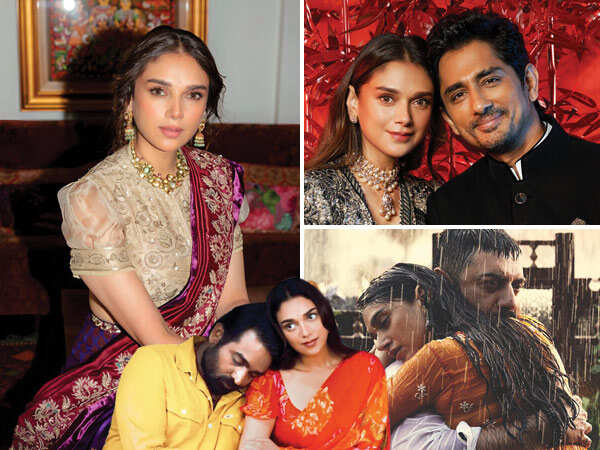
Aditi Rao Hydari speaks about Gandhi Talks with the bright-eyed excitement of someone deeply, almost instinctively in love with cinema and with life itself. Drawn to the film’s near-silent, emotion-led storytelling, she reflects on the rare joy of communicating without words, of trusting stillness, glances and breath to carry meaning.

For Aditi, the experience reaffirmed her belief that some of the most powerful stories are felt rather than heard. She also opens up about the beauty of collaboration, the quiet alchemy that unfolds when artistes listen to one another, stay present and allow a shared vision to take shape organically. There is a palpable thrill, she says,
in surrendering to a collective creative space, where ego dissolves and discovery takes over. At the heart of it all lies her enduring, fiercely protected childlike curiosity, a sense of wonder nurtured by family and mentors, and now lovingly safeguarded by her husband Siddharth.

With an affectionate smile, she calls him her “pixie soulmate”, someone who understands her silences as intuitively as her words. In this warm, candid and engaging conversation, Aditi opens up about art and partnership, about faith in the process, and about the gentle, deliberate act of finding light and joy amid the noise.

Excerpts: 

What drew you to Gandhi Talks? And what did the experience of working in a silent film demand from you as an actor?
Many things drew me to it but the first was the novelty. The film felt new and exciting. Cinema began with silent films and to return to that space, to be part of something rooted in such a beautiful intention, was very special. I had always wanted to tell a story like Gandhi Talks. The most compelling aspect was the silence itself. You don’t have words to convince people; you have to reach them through actions and emotions. You need to deeply understand your character, who these people are, where they come from. Nothing else matters. What matters are their dreams, hopes, love and struggles. That’s what the audience sees: their choices, how they act, how they live. You realise that the film is ultimately about humanity and connection. True connections come from the heart, from feelings and actions. I found that deeply fascinating.
Aditi Rao Hydari

Not having any dialogue might have been challenging…

I’ve done a Malayalam film called Sufiyum Sujatayum, where I played a mute girl, so the absence of dialogue wasn’t entirely new to me. However, the difference here was that everyone was silent. We were communicating purely through situations and actions,not through sign language, but through what was unfolding around us. We communicated through our eyes and our presence. That was very different, especially while shooting the songs. We would ask the director to play music, because otherwise there would be complete silence on set. Sometimes, you have to feel the rhythm in your own head.
You and Vijay Sethupathi bring very different energies to the screen. Did that ever challenge or push you while performing together?
I don’t like being self-conscious about my energy or acting style. I prefer knowing less,overthinking can become a burden. I like to remain free of those concerns, including ego. Vijay Sethupathi is a phenomenal actor, and I’ve long admired his work. We had almost collaborated on three films earlier, but for various reasons they never materialised. I’m glad this one did. I came in without any preconceived notions. I listened, absorbed, flowed and reacted. That space between ‘action’ and ‘cut’ is magical. I assume my co-actor loves cinema as much as I do, and reacting to someone like him was exciting. There’s a confrontation scene between our characters that was particularly thrilling to film,charged, intense and nuanced for both of us.
Aditi Rao Hydari

How do you do your job as an actor when you don’t spoon-feed the audience with dialogue?

Every film is a challenge because you’re stepping into another world, another life. You take on their heart, thoughts, clothes, habits, their way of being, responding, laughing, eating. Everything is unfamiliar, and you have to make it your own. I love dialogue-driven films and relish saying beautiful lines. But when that is taken away in a silent film, the real challenge is accepting the absence of words,being okay with not verbalising emotion. I love punchy lines, humour and lyrical dialogue, but I also love letting my eyes speak. It was challenging, but it never weighed me down. It was an exciting challenge,a good kind
of fear.
How do you view collaboration while performing a scene?
It’s about presence, listening to the director, listening to your co-actor, and responding honestly. It’s also about team spirit. We often hear stories of actors trying to steal each other’s spotlight, but I don’t understand that. A film only works when everyone is doing their best. When I want the person in front of me to shine, and they want the same for me, we elevate each other. That’s when a film truly comes alive,when the story finds its rhythm.
What does preparation really mean to you as an actor?
For me, preparation is about listening, being present, staying curious, absorbing and then flowing with emotion. It’s about reacting and emoting. I approach every film this way. I’m very much a director’s baby, and I love my co-actors. Making a film feels like being on a playground, playing with a companion on set. It’s about giving and taking, acting and reacting, and creating the story together through the director’s vision.
Do you remember any survival skills you had to teach yourself when you first started out?
I’m grateful that I didn’t have to. I started in 2011, doing a few things while studying and figuring life out. I dreamed of becoming a Mani Ratnam, Sanjay Leela Bhansali or Rituparno Ghosh heroine but I couldn’t yet call myself an actor. I stumbled, fell and scraped my knees, but that’s the joy of being a child. You get up, dust yourself off and move forward. You’re optimistic, curious, open to adventure, filled with belief and dreams. That mindset has always kept me grounded.
When the noise gets too loud, what helps you find your way back to yourself?
My family and close friends are my anchors. They support me unconditionally and keep the five-year-old in me alive. Not being self-conscious has also helped me shed negativity,to find music in chaos and light in darkness. My grandmother, Shanta Rameshwar Rao, and my mother, Vidya Rao, have always protected my childlike innocence. And now Siddharth, who is very similar to me in that way, is also a strong support system 
If 2016 Aditi could see you in 2026, what would surprise or reassure her the most?
I hope she would see evolution,in my work and in myself. I love that my core remains intact, that the five-year-old inside me is still very much alive. In 2016, I never imagined I would find my pixie soulmate. He protects that part of me, just as I protect it in him. Back then, I had a list of directors I wanted to work with, and by 2026 I’d collaborated with most of them. I remember watching Manisha Koirala in Mani Ratnam’s Bombay and wanting to act like her. That dream came true when I received a call from Mani Ratnam himself. I thought it was a prank call and almost hung up. That year changed my life.
Aditi Rao Hydari

 Has Siddharth watched Gandhi Talks?

He watched the first edit and gave me feedback. I always find his perspective interesting. He thought the film was compelling, though he hasn’t seen the final version yet as he’s currently shooting. He values cinema deeply, and I value his thoughts immensely.
Aditi Rao Hydari
Do you often exchange notes about cinema?

All the time. Siddharth is a cinema baby, excited about storytelling in all its forms. He’s immensely talented: he writes, composes music, understands the camera, sound design and has a sound studio. He’s always experimenting. He has many interests beyond cinema as well, which makes being around him inspiring. He’s full of ideas.

Aditi Rao HydariAre we likely to see the two of you together on screen?
I hope so. We’re drawn to similar things, adventurous narratives, distinctive directors, fresh storytelling. If the right filmmaker comes to us with something we both believe in, I’d love that. Ideally, it should feel like being back on a playground together. 


Also Read: Exclusive: Aditi Rao Hydari Opens Up About Her Marriage With Siddharth

Read full article
Exclusive: Bhumi Pednekkar talks about Daldal and rising above the noise
onmynews.com

Exclusive: Bhumi Pednekkar talks about Daldal and rising above the noise

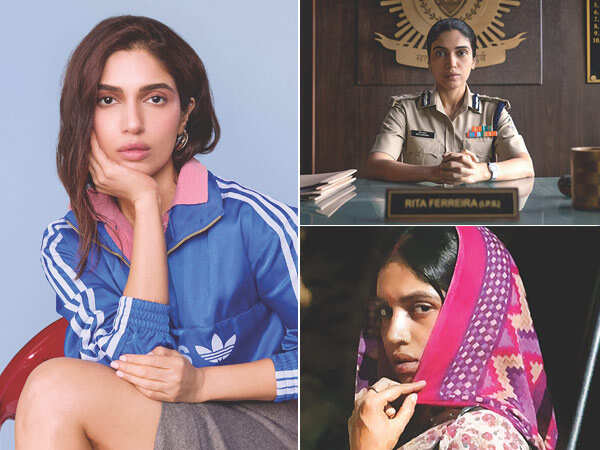
More than a decade after making her debut with Dum Laga Ke Haisha, Bhumi Pednekkar finds herself at an interesting junction in her career. Over the years, Bhumi has built a strong body of work with films like Sonchiriya, Saand Ki Aankh and Badhaai Do, to name a few. However, the past year brought in its share of online scrutiny following The Royals, with much of the chatter shifting from her performance to her appearance. She didn’t let that affect her and moved on, stepping into darker territory with Daldal, a gritty crime thriller in which she plays DCP Rita Ferreira, a police officer drawn into a case dealing with a serial killer.

For an actor accustomed to heightened drama, this role demanded something entirely different. When I meet her during Daldal’s promotions, she appears steady and focused, untouched by the noise around her. Her attention stays firmly on the show, and she speaks with clarity and conviction. She talks about inhabiting a character who speaks little but carries a great deal within and how Daldal explores the long shadow of childhood trauma. Bhumi also opens up about online bullying, admitting that developing thick skin is easier said than done. Spirituality, she says, helps her stay grounded. She also shares her desire to play an out-and-out ‘baddie’ someday, just like Ranveer Singh’s Khilji in Padmaavat. Excerpts:

You’ve been credited as Bhumi Satish Pednekkar in Daldal.
Yes. Including my father’s name felt right. It had been on my mind for a long time. It was definitely a step in my healing. I never really had the space to process what happened with him before. Over the past few months, when I wasn’t working on a film set, I finally had that time. It means a great deal to me.
After completing more than a decade in the industry, how would you define success?
Success today is more about purpose. What is my purpose? Why am I doing films? Why do I love cinema? Earlier, it was about creating a space for myself, making sure I survived. Back then, success meant survival. Today, I don’t have those insecurities. Now it’s about purpose. When I look back at my work two or three decades from now, I need to be proud of it.
Bhumi Pednekkar


Which role of yours changed you in the best possible way?
I won’t include my first film, Dum Laga Ke Haisha,  because it will always be too special. But apart from that, it would be Sonchiriya. That film unlocked something in me, both as a performer and as a human being. It had an everlasting impact on me, something I’m still dealing with. Other pieces of work I’m proud of are Saand Ki Aankh, Pati Patni Aur Woh, Badhaai Do, Badhaai Ho and Bhakshak.
If you could say one thing to the young Bhumi who had just started out, what would it be?
Don’t succumb to the noise.
Was there ever a point where you felt like succumbing?
No, I’ve never felt like giving up. I’m a resilient person. I’ve built this life and I will never give up
on it. I’m very positive. I have a lot of love in my life and I’m lucky to be part of a family that gives me so much of it. That makes me strong. But it’s life. You lose a loved one. You see someone you love in pain. Films work. Films don’t work. It happens to everyone.
The past year has been unkind to you, especially after The Royals. You were trolled over your appearance…
Just because we’re in the public eye doesn’t mean bullying doesn’t affect us. You can’t ignore it. I’d be lying if I said you could. Of course, it impacts you deeply because we’re all human. I keep returning to spirituality. I go back to God and meditation. That’s the only way to stop yourself from turning bitter. The moment you start walking that path, everything changes. You realise we are nothing in the universe, just a speck and that gives you perspective. It humbles you.
Bhumi Pednekkar


Can you further elaborate?
Spirituality allows you to surrender. You begin to understand that if something bad is happening, it’s happening for a reason, and the same goes for good things. Somewhere along the way, you stop being overly affected by either. I’m still working on it. I haven’t cracked it yet. It’s lifelong work. But today, at least, I have a medium. Therapy is important. Seeking help is important. Having people you can talk to is important. But spirituality is something I would urge people to explore, especially in the times we’re living in, when all of us are subjected to so much unkindness.
Have you always been spiritual?
I thought I was spiritual until I truly understood what spirituality means. For me, the practice earlier was about giving back and being good to people. That’s always been a big part of who I am. But true spirituality is about surrendering to a higher power. That’s what it means to me, and it has given me immense strength.
What attracted you to Daldal?
The freshness with which Daldal was written really excited me. It’s a very intelligent show. Yes, it’s a cop drama and a psychological crime drama but it doesn’t rely on familiar tropes. It’s deeply character-driven It’s supported by some phenomenal characters and was challenging for me because of how Rita Ferreira is written. She has a lot of duality. There’s one version of her in uniform and another when she’s not, and both exist on the same spectrum, yet feel worlds apart. On duty, she’s earnest and honest. Her job is the one thing she truly loves and deeply cares about. But there’s also a lot of violence within her. She’s volatile, lonely and broken.
Unresolved childhood trauma is a key theme of the series.
Yes. The core theme is how childhood trauma shapes you as an individual. Rita has many of the instincts associated with a serial killer, which is why you’re never sure what she’s capable of. She has immense unresolved trauma and a lot of darkness within her. What excited me was the restraint. I’ve played roles where the drama was very heightened, but here I barely have any dialogue across seven episodes. She’s stoic and tightly controlled because she’s hiding so much. I’ve always been told that less is more and that’s the philosophy the show is built on. You don’t know what Rita is thinking or what she might do, except when she’s angry. She doesn’t know how to control it because she isn’t someone who knows how to receive love.
When you play such an intense character, does it affect you after the cameras stop rolling?
Most of the time, I know how to draw a line. But with a character like Rita Ferreira, it was tough. The series was shot in Mumbai, and the role consumed me. When you have a lot of dialogue, you release so much through words. But with her, I was constantly alert to triggers.
Were there moments when you related to the character on a personal level?
One very strong theme in the show is how patriarchy exists everywhere. That’s something I connected with deeply. Rita is a woman in a man’s world. She’s constantly trying to break the stigma around her gender and is often made to feel that any success she achieves is because she’s a woman, not because she deserves it. That’s something women deal with all the time. The way she responds to it and navigates it is something I strongly connected with.
Bhumi Pednekkar

Do you think the film industry is more liberal towards women?

There is definitely more equality. I won’t paint it as entirely rosy but it’s far fairer than many other industries. And it’s not just about actors. Women are working behind the camera too, writing, producing, directing, performing their own stunts. Is it enough? Not at all. We’re still far from an ideal situation. But things have improved. Today, there are many departments where women can lead conversations, rather than being limited to stereotypical roles.
Bhumi Pednekkar
One assumption people make about you that’s completely wrong?

People have forgotten how hard I’ve worked after Dum Laga Ke Haisha and that I’ve had a long, honest fitness journey. Those assumptions need to stop.

Is there a genre or character you’d like to explore?
I’d love to play an antagonist, an out-and-out baddie. Something like what Sanjay Leela Bhansali did with Ranveer Singh’s Khilji in Padmaavat. It’s iconic.

Also Read: Daldal Trailer: Bhumi Pednekkar Hunts a Ruthless Serial Killer in This Gritty Crime Thriller

Read full article
…
Link copied!