Live · Global · Independent
Live Feeds
PinkVilla
Forbes
NDTV
Hindustan Times
Pak Court Admits Nawaz Sharif’s Appeal Against Convictions, Says Lawyer
onmynews.com

Pak Court Admits Nawaz Sharif’s Appeal Against Convictions, Says Lawyer

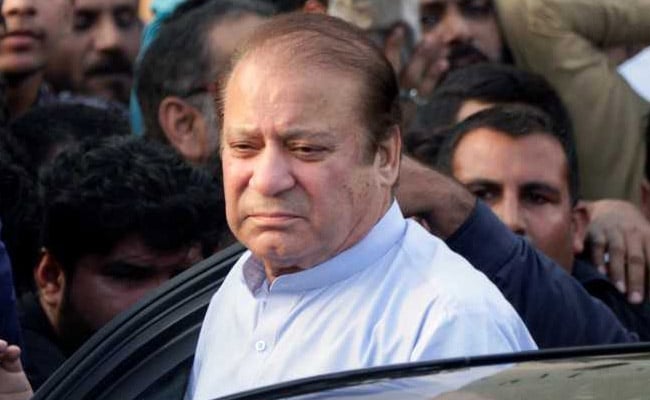
A Pakistan High Court on Thursday admitted former three-time Prime Minister Nawaz Sharif’s appeal against his conviction in two corruption cases, his lawyer said.

The decision will allow Nawaz Sharif to contest his sentences, which have been pending since his ouster as premier in 2017, in the High Court.

The court has admitted the appeals, which is a way forward to fight against the convictions, his lawyer, Amjad Pervaiz, said.

Nawaz Sharif returned home from self-imposed exile last week after being granted permission to travel to London in 2019 to receive medical treatment while serving a 14-year prison sentence for corruption.

He was granted protective bail earlier this week until Oct. 26, preventing his arrest. The court did not give a fresh ruling on the bail decision.

While he cannot run for, or hold public office, until the conviction is overturned, his party says he aims to become prime minister for a fourth time.

It is a step toward ending the injustice, Nawaz Sharif’s party spokesperson Marriyum Aurangzeb said.

Read full article
Explained: What War Crimes Laws Apply To The Israel-Gaza War
onmynews.com

Explained: What War Crimes Laws Apply To The Israel-Gaza War

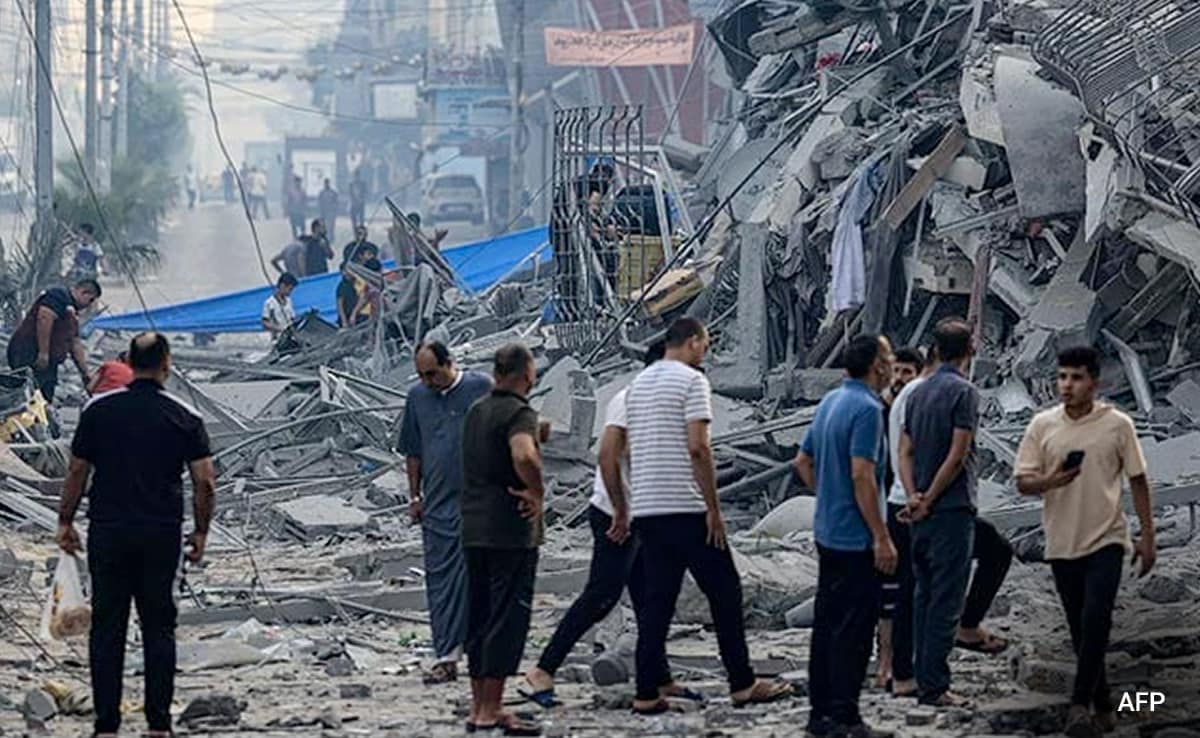
War between Israel and Palestinian forces since Hamas group’ October 7 assault have created a huge and rising death count – and accusations of war crimes – on both sides.

The war falls under a complex international system of justice that has emerged since World War Two. Even if states say they are acting in self-defence, the rules of armed conflict apply to all participants in a war.

WHAT LAWS GOVERN THE CONFLICT?

Internationally accepted rules of armed conflict emerged from the 1949 Geneva Conventions, which have been ratified by all UN member states and supplemented by rulings at international war crimes tribunals.

A series of treaties governs the treatment of civilians, soldiers and prisoners of war in a system collectively known as the “Law of Armed Conflict” or “International Humanitarian Law”. It applies to government forces and organised armed groups, including Hamas militants.

WHAT ACTS COULD VIOLATE WAR CRIMES LAW?

New York-based Human Rights Watch cited as possible war crimes the deliberate targeting of civilians, indiscriminate rocket attacks, and the taking of civilians as hostages by Palestinian armed groups, as well as the Israeli counter-strikes in Gaza that killed hundreds of Palestinians.

The taking of hostages, murder and torture are explicitly banned under the Geneva Conventions, while Israel’s response could also be subject to a war crimes investigation.

In response to the Hamas violence, Israel put Gaza, home to 2.3 million people, under siege and launched by far the most powerful bombing campaign in the 75-year-old history of the Israeli-Palestinian conflict, destroying whole neighbourhoods.

U.N. Secretary-General Antonio Guterres pleaded on Tuesday for civilians to be protected, voicing concern about “clear violations of international humanitarian law” in Gaza.

WHAT DO THE GENEVA CONVENTIONS SAY?

The overarching goal of the Geneva Conventions and thus international humanitarian law is to protect civilians in wartime and minimize suffering in war.

Under the laws of armed conflict combatants include members of state armed forces, military and volunteer forces and non-state armed groups.

A siege can be considered a war crime if it targets civilians, rather than a legitimate means to undermine Hamas’ military capabilities, or if found to be disproportionate.

Directly targeting civilians or civilian objects is strictly forbidden under the laws of armed conflict. However there are instances in which otherwise civilian objects can become legitimate military targets.

Even then, attacks on military objectives have to be proportional, meaning they must not lead to excessive loss of civilian life or damage to civilian objects.

Proportionality is not a numbers game where count of civilian casualties on one side is compared to the other, rather the loss of civilian life should be proportionate to the direct and concrete military advantage expected from that specific attack.

WHICH INSTITUTIONS CAN TRY ALLEGED WAR CRIMES?

The first in line to try alleged war crimes are local jurisdictions, in this case courts in Israel and the Palestinian territories.

If alleged Palestinian perpetrators of atrocities in Israel and all alleged perpetrators of crimes on the occupied Palestinian territories are not brought to justice at home, the International Criminal Court (ICC) in The Hague is the only international legal organ able to bring charges.

The ICC’s founding Rome Statute gives it legal authority to investigate alleged crimes on the territory of its members or by their nationals, when domestic authorities are “unwilling or unable” to do so.

WHAT IS THE ROLE OF THE ICC?

The International Criminal Court (ICC), the world’s permanent war crimes tribunal, opened in The Hague in 2002. It has jurisdiction over war crimes, crimes against humanity and genocide in its 123 member states or committed by its nationals.

Many of the world’s major powers are not members, including China, the United States, Russia, India and Egypt. The ICC recognises Palestine as a member state, while Israel rejects the court’s jurisdiction and does not formally engage with it.

With a limited budget and staff, ICC prosecutors are already investigating 17 cases ranging from Ukraine and Afghanistan to Sudan and Myanmar.

The ICC has had an ongoing investigation into allegations of war crimes and crimes against humanity committed in the occupied Palestinian territories since 2021.

It has not issued any arrest warrants.
Read full article
Ukraine Says Its Black Sea Grain Corridor Is Working
onmynews.com

Ukraine Says Its Black Sea Grain Corridor Is Working

Ukrainian Deputy Prime Minister Oleksandr Kubrakov denied on Thursday reports by Ukrainian and British firms that the new Black Sea export corridor had been suspended.

“The information regarding the cancellation or unscheduled stoppage of the temporary #Ukrainian_corridor for the movement of civilian vessels from and to the ports of the Big Odesa (region) is false,” Kubrakov said on X, formerly Twitter.

“All available routes established by the Ukrainian Navy are valid and being used by civilian vessels.”

The Kyiv-based Barva Invest consultancy, British security firm Ambrey and a specialised outlet, Ukrainian Ports, reported that Ukraine had suspended use of the corridor due to a possible threat from Russian warplanes and sea mines.

Ukraine has been using the corridor to try to revive its seaborne exports without Russian approval, defying threats from Moscow which quit a U.N.-brokered deal in July that had allowed some food exports to flow despite the war.

“We would like to inform you of a temporary suspension of vessel traffic to and from (the ports). The current ban is in force on Oct. 26, but it is possible that it will be extended,” the consultancy said on the Telegram messaging app.

Chicago wheat futures, a global price benchmark, turned higher on the news to recover from an earlier two-week low. They later traded up about 1%.

Wheat futures had been pressured this week by hopes that Ukraine would expand grain exports, as well as rain relief in dry crop belts worldwide. [GRA/]

Barva Invest, which specialises in Ukraine’s agriculture sector, said a de facto suspension had already been in place for two days at the behest of Kyiv’s military, which had cited a threat from increased Russian air force activity.

Russian President Vladimir Putin said last week that he had ordered Russian warplanes armed with Kinzhal missiles to patrol the Black Sea.

British maritime security company Ambrey said in a report that the Ukrainian Seaport Authority issued a communique late on Wednesday, saying: “There would be no vessel movement along the corridor for entry and exit on 26th of October, 2023.”

The suspension was prompted by Russian Air Force operations in the region, it said.

“On October 25th, Ambrey informed its clients that the Russian Air Force had dropped at least four objects, likely acoustic and/or magnetic sea mines, into the Ukrainian grain corridor transit area near Snake Island, Ukraine,” it said.

HUMANITARIAN CORRIDOR

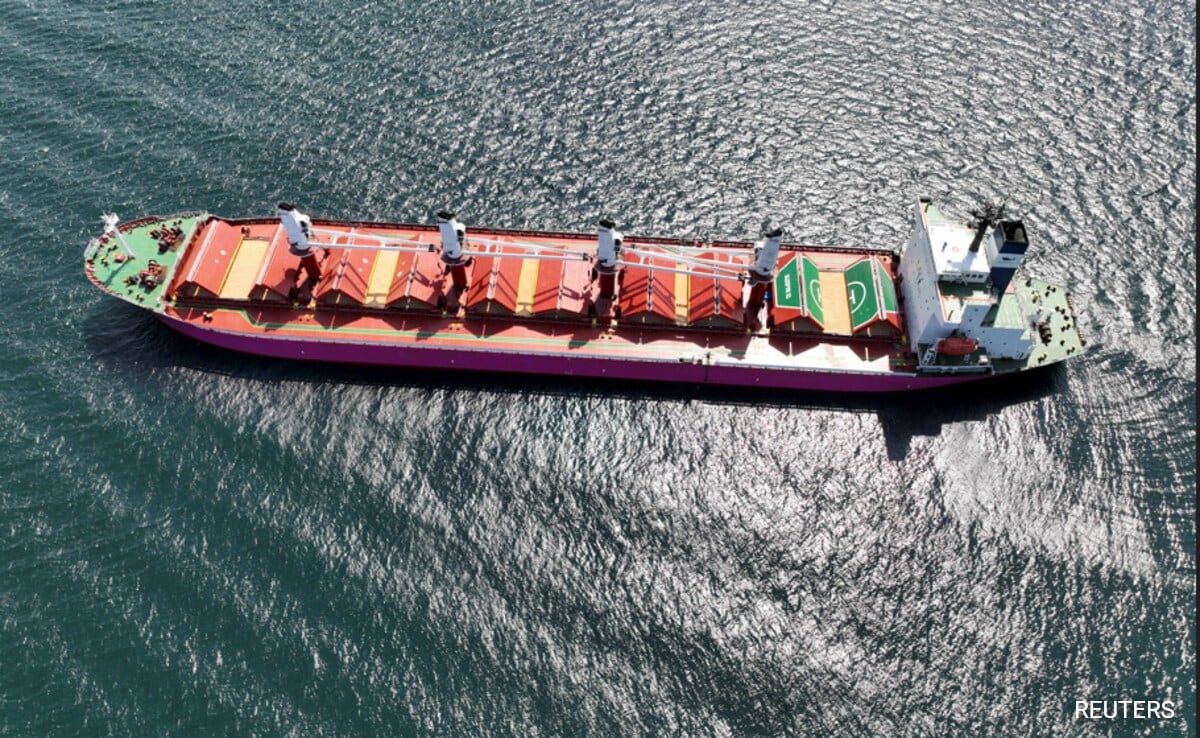
Ukraine launched a “humanitarian corridor” for ships bound for African and Asian markets in August to try to circumvent a de facto blockade in the Black Sea after Russia quit the deal that had guaranteed Kyiv’s seaborne exports during the war.

Later, a senior agricultural official said the route – which runs along Ukraine’s southwest Black Sea coast, into Romanian territorial waters and onwards to Turkey, would also be used for grain shipments.

About 700,000 tons of grain have left Ukrainian ports via the new route since it began operating in August. Ukraine shipped up to six million tons of grain a month from its Black Sea ports before Russia’s full-scale invasion in February 2022.

Kubrakov said 23 ships were loading in the ports of Odesa, Chornomorsk and Pivdennyi.

“A total of 51 vessels used the entrance corridor. 33 vessels exported more than 1.3 million tons of Ukrainian agricultural products and other cargo,” he said.

Read full article
Link copied!